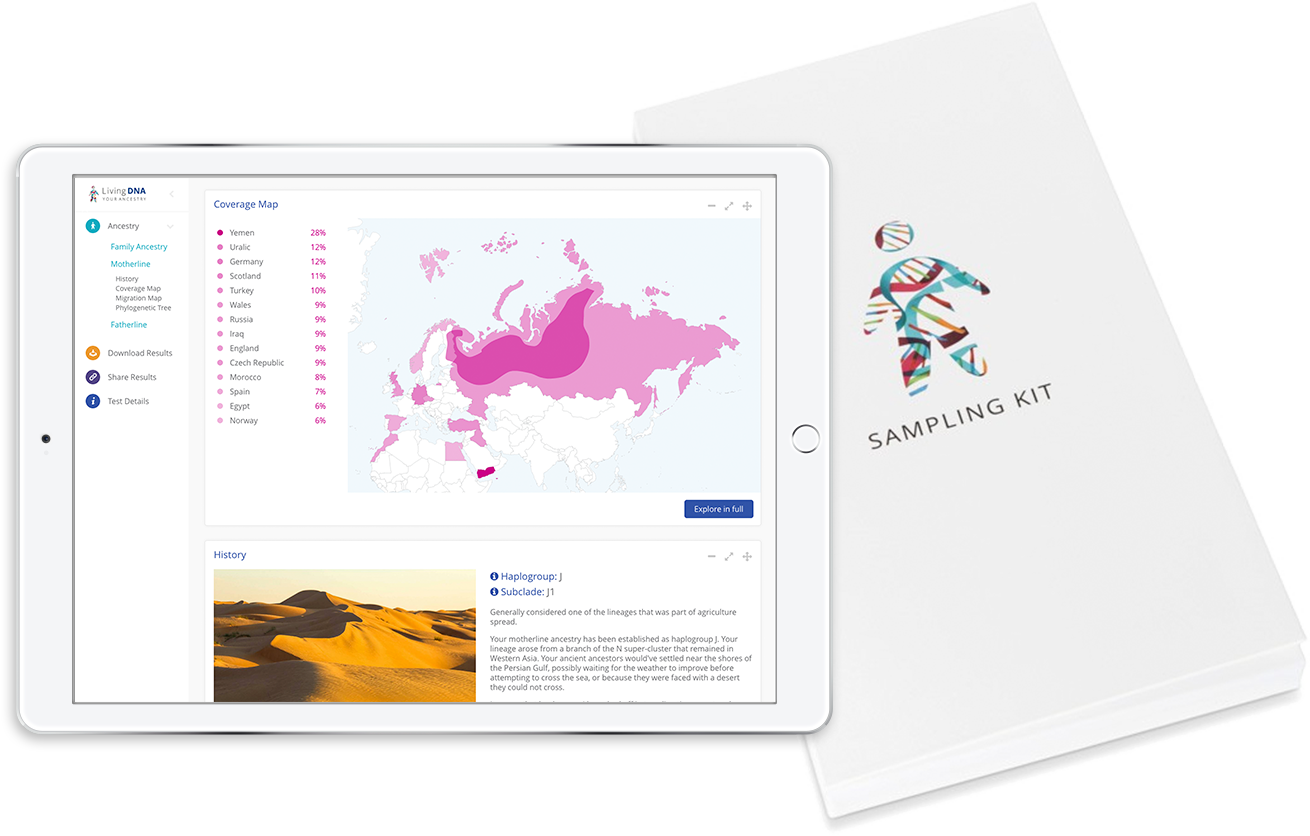


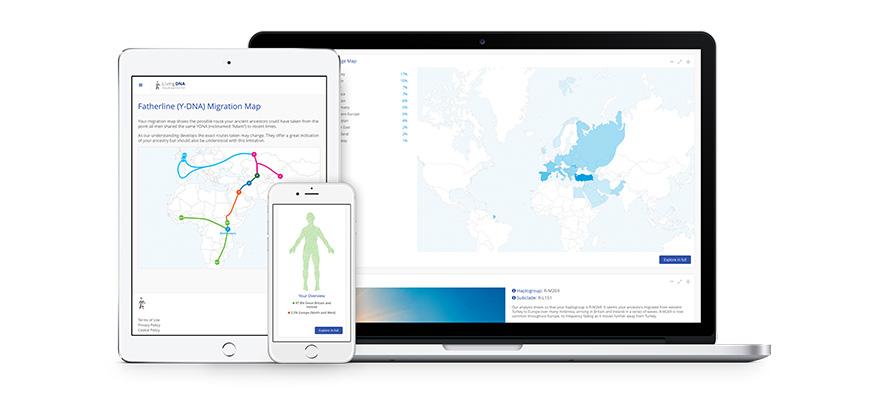
Family Finder & Ethnic Ancestry

   The worlds most detailed ancestry test, looking at all sides of your family.

Family Finder DNA Test

  • Over 94,000 DNA Markers used to determine Percentage Ancestry
  • From All your Ancestors (Male and Female)
  • Very detailed population groups
  • Over 27 population groups compared
  • Up to 4 Ancestry Populations included in your breakdown
  • Included Free of Charge with the Family Finder DNA Test
£299.00 (inc. Vat)

What is the DNA Population Finder?

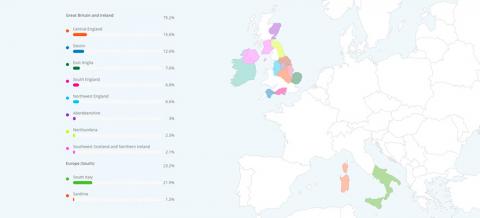
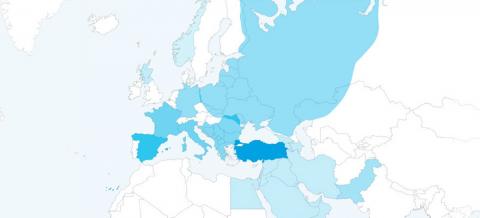
The DNA Population Finder allows you to discover your personal ethnic and genetic ancestry percentage compared to populations around the world. It works by comparing your genetic code to that of populations around the world. The test then shows the amount of ancestry you share with the populations that make up your DNA. You can expect up to four main regions to make up your DNA, which are broken down into sub regions and countries if possible.

What populations are tested?

The DNA Worldwide population database for Population Finder consists of samples from scientific studies only. This makes sure the Data is highly accurate. Below is the current list of subgroups and populations. Our dedicated scientific advisory board will continually review published information and if appropriate the database will be updated. Because Population Finder has stringent requirements, not all published populations group data will be included. 

Continental Group

Sub-continental Group

Representative Population

Africa


Central African


Biaka Pygmy


Mbuti Pygmy


East African


Bantu [Kenya]


Southern African


Bantu [South Africa]


San


West African


Mandenka


Yoruba

America


Central American


Maya


Pima


South American


Columbian


Karitiana


Surui

East Asia


East Asian


She


East Central Asian


Han


Han [North China]


Tujia


Japanese


Japanese


Mongolian/Northeast Asian


Daur


Mongolian


Oroqen


Northeast Asian


Hezhen


Siberian


Yakut


South Central Chinese


Naxi


Southeast Asian


Cambodian


Dai


Lahu


Malay


Miao


Yi

Europe


Northeast European


Finnish


Russian


Caucasus


Adygei


Southeast European


Romanian


Southern European


Italian


Sardinian


Tuscan


Western European


Basque


French


Orcadian


Spanish

Middle Eastern


Iranian


Iranian


Jewish


Jewish


Middle Eastern


Druze


Palestinian


Bedouin


Bedouin


Bedouin [South]


North African


Mozabite

Oceania


Melanesian


Melanesian


New Guinea


Papuan

South Asia


Central Asian


Hazara


Tu


Uygur


Xibo


Indian


North Indian


Southeast Indian


Pakistani


Balochi


Brahui


Burusho


Kalash


Makrani


Pathan (Pashtun)


Sindhi


Is mtDNA or Y-Chromosome DNA Used with Population Finder?

No, mtDNA or Y-chromosome DNA results are not used within the Population Finder DNA Test. Only your autosomal DNA results from the Family Finder DNA Test are used.

How does Population Finder work out the ancestry percentages?

The DNA Population Finder works out the percentages of different ancestries that comprise your DNA code by matching your autosomal DNA against a multi-dimensional data table (a matrix). In a multi-step process, the most likely combination of population groups that contribute to your DNA along with the percentage of each is determined. These are the basic steps.

1. Your DNA sample is tested and processed by the Population Finder program. This compares your DNA code to the populations groups around the world.

2. A smaller data-set of results is created that match your DNA that contain up to ten ancestral population groups.

Ancestral Population

Representative Population

Russia/Caucasus

Adygei

Middle East/North Africa

Bedouin [South]

India

Southeast Indian

Central Africa

Mbuti Pygmi

Melanesian

Melanesian

Central America

Pima

Western Europe

Orcadian (Orkney Islands)

East Central Asia

Tujia

Siberia

Yakut

West Africa

Yoruba

3. The best matching ancestral population from step 2 is used to determine which of the reference populations will be searched in most detail. For example which population within Western Europe is searched. 

4. The program then searches the complete data-set produced in step 2 and finds the best number of populations to included (from 1 to 4).

5. Where there are two or more populations from the same Sub-continental group the ratio between them is reported. For example 70% Europe (Western Europe) and 30% Europe (Southern Europe). If a specific country can be reported it is, for example Southern Europe - Italian.

How many populations will my report show?

The number of populations shown in your Population Finder Report is dependent on how many populations the program determines are needed. This will be between one and four population groups. 

How do you decide how many populations are shown in my report?

The number of populations that we show in your report is calculated during the matching process. In most cases, unless the individual shows a strong match to a single population, the program will include a second population, for example, 90% Western Europe and 10% Europe. Third and fourth populations are only used when they provide a significant improvement in the overall quality of the match.

Why do some results show only the larger group (i.e. Europe) and others show more detail such as Western Europe or Italy?

If the report only shows the larger (Continental) group, then during the matching process the person matched populations from more than one Sub-continental group within the Continental group. If however the person matched only one Sub-Continental group then this is shown in brackets. 

As an example, Tom Smith had the following result.

Continent

Percentage

Margin of Error

Europe (Western Europe)

52.38%

+/-0.01%

America

47.62%

+/-0.01%

Europe (Western Europe) is shown because Tom matched both the French and Orcadian (Orkney Islands) populations. If Tom had only matched French then this would have shown as Europe (French). Tom is showing  America because Tom matched the Pima population in the Central American Sub-continental group and the Columbian population in the South American Sub-continental group. Again if Tom had matched just one of these, we would have listed this.

Why are my results showing two populations, but one being a sub population of the other?

Your DNA Ancestry results are showing that you match populations from the same area. However you have a strong match to one group for the majority of your ancestry, but there is a very clear contribution from another group or groups.

For example, Sara Walker has these results.

Continent

Percentage

Margin of Error

Europe (Western Europe)

93.27%

+/-2.38%

Europe

6.73%

+/-2.38%

Her results show Europe (Western Europe) for her first contributing group because she had a strong match with the Orcadian (Orkney Islands) population. She shows simply Europe for her second contributing group because the remainder of her ancestry matched the Finnish population from the Northeast European Sub-continental group and the Russian population from the Russian/Caucasus Sub-continental group.

Can the test tell me which side of the family certain ancestry comes from?

The Population Finder Test works by testing your Autosomal DNA. This comes equally from both parents but is random and therefore it is not possible to tell which part is from which side of the family. 

Will the Population Finder report tell me a specific country my Ancestry is from?

This is not possible with DNA testing because political boundaries (ancient or current) do not relate to generic ancestry. There has always been a continuous movement between geographic regions throughout human existence. Our genetic makeup shows this with gradients in the frequencies of each genetic marker.

My Report shows 35% of my ancestry comes from Southern Europe. What does this mean in terms of my recent ancestry vs. longer term ancestry?

Your percentage from any one population may reflect either recent or long term genetic ancestry. Determining which it is requires that you evaluate your results in light of what you know of your family history and the history of your ancestors.

Having about one third of your ancestry from a population may indicate that there has been recent admixture in your family. That is, some of your recent ancestors were from that population.

On the other hand, it may indicate that those ancestors who came from the population were there for many generations and the admixture levels common to all from the ancestral town’s population.

This test says that I have some ancestry from a specific region. I know that all of my ancestors were from a different population(s). Could the Population Finder be wrong?

Human history and migration is more complex than the boundary of a single country. It is therefore not expected that a European individual will have strictly European ancestry. At the same time nor will any population be totally specific. Most of us have a small percentage of ancestry from other regions that some tests miss.

For example, Karen Brubank has some ancestry from western Sicily and the rest from the United Kingdom. She has the following Population Finder resul

Continent

Percentage

Margin of Error

Europe

82.46%

+/-2.32%

South Asia

17.54%

+/-2.32%

Her South Asian ancestry is indicative of historic migrations and population settlements in Sicily. 

Are there any populations that are difficult to distinguish?

How difficult it is to distinguish between two populations depends on whether or not the populations in question share recent histories (one hundred to two thousand years). When they do, it is much harder to distinguish between them.

One such situation exists between people from Southern Europe (Italy, Greece, etc.) and the Middle East (Jewish populations, Palestinians, etc.). Historically there have been population movements between Southern Europe and the Middle East in the form of trade, enslavements, and forced religious conversions. As a result, people with known genealogical ancestry from one group may show genetic ancestry from the other.

In these cases, the Population Finder program will show results that reflect the genetic ancestry. For example, someone who is one half Southern Italian might have these results.

Continent 

Percentage

Margin of Error

Europe

52.15%

+/-2.39%

Middle East

47.85%

+/-2.39%

Why don't the percentages from each population add up to 100%?

Your results will not add up to 100% when you have a small amount of DNA that matches another population, but the match is too distant to report with confidence. These weak matches are not included in reported results. This ensures the quality of your matches, but as a result the total percentage from the other populations that you match may be less than 100%.

What is the Margin of Error? 

The margin of error is a measurement of the confidence of a match. The Population Finder program calculates the margin of error by evaluating the possible populations a sample matches or partly matches. 

I have a family tradition of Native American ancestry. Will this be shown? 

The Population Finder DNA Test may be able to match a significant Native American contribution to your genetic ancestry to one of the reference populations. 

It is also important to keep in mind that you may have a Native American ancestor but not have sufficient genetic heritage from them to be detected by a DNA test. Therefore, genetic testing can confirm your ancestry but not disprove it.

All of my ancestry comes from Europe. Why do my DNA results include Africa?

If you have a known European genealogy and partial genetic ancestry from Africa, it is an indication that some of your ancestry traces to Africans who were taken to Europe and the Americas as indentured servants and slaves. At times, the source may first trace back to those who intermarried with Native Americans.

When considering what genetic ancestry from Africa means to you and your research, you should consult the full list of reference populations for the African Continental group and each of its Sub-continental groups.

All of my Ancestry comes from Europe. Why do my DNA Test results include America?

The most likely reason for someone with a European genealogy to have genetic ancestry from the Americas is a previously unknown Native American ancestor. This may be from North or South America. In some cases the source may include people who were taken to Europe by European explorers during the early years of European Colonization.

When considering what genetic ancestry from America means to you and your research, you should consult the full list of reference populations for the America Continental group and each of its Sub-continental groups.

All of my Ancestry comes from Europe. Why do my DNA Results results include East Asia?

For someone with Eastern European ancestry, some genetic ancestry from East Asia is expected due to historic population expansions from the East.

When considering what genetic ancestry from East Asia means to you and your research, you should consult the full list of reference populations for the East Asia Continental group and each of its Sub-continental groups.

All of my Ancestry comes from Europe. Why do my DNA Test results include Middle East? 

Because there have been many migrations between Europe and the Middle East, there are also many reasons for someone from Europe to have Middle Eastern genetic ancestry. First, anyone from a Mediterranean country or European border country will have genetic ancestry that has much in common with the Middle East. This makes it difficult to distinguish between them.

Traces of Middle Eastern genetic ancestry have been found in Anabaptist groups (Mennonite, Amish, etc.) and mixed ancestry groups in the Americas (i.e. Black Dutch or Melungeon).

When considering what genetic ancestry from Middle East means to you and your research, you should consult the full list of reference populations for the Middle East Continental group and each of its Sub-continental groups.

All of my Ancestry comes from Europe. Why do my DNA Results include South Asia?

When you have European ancestry and some South Asian genetic ancestry, it is highly likely that the source population comes from the Rom and Sinti peoples.

When considering what genetic ancestry from South Asia means to you and your research, you should consult the full list of reference populations for the South Asia Continental group and each of its Sub-continental groups.